Where customers come from
Customers arrive with intent and context. They already know their issue.
None carry context.
Customers arrive through Amazon, but context is still not passed to Help Pages.
Where CS Help Pages Fall Short
0 interactions. No context. High effort.
595 million customers arrive already knowing their problem and seeking targeted information or resolution. Help pages provide generic content, can't resolve their issue, and offer no path forward when they fail.
Customers arrive with intent and context. They already know their issue.
Customers arrive through Amazon, but context is still not passed to Help Pages.
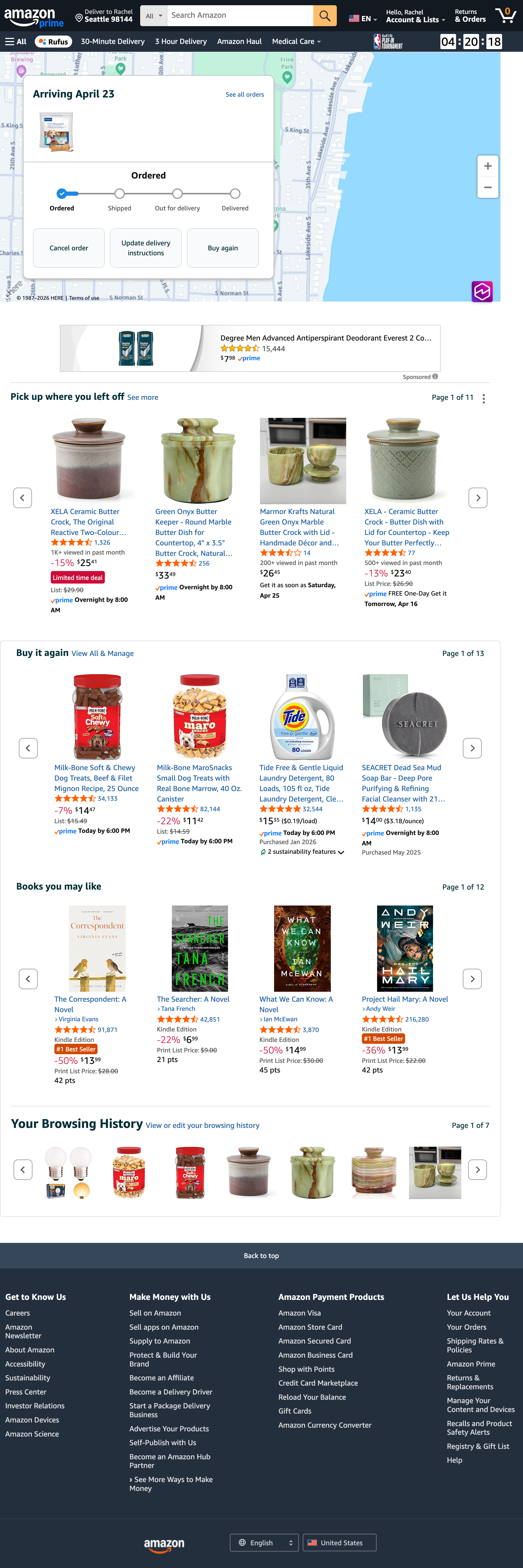
Checks delivery date, sees it is past due or status is unclear
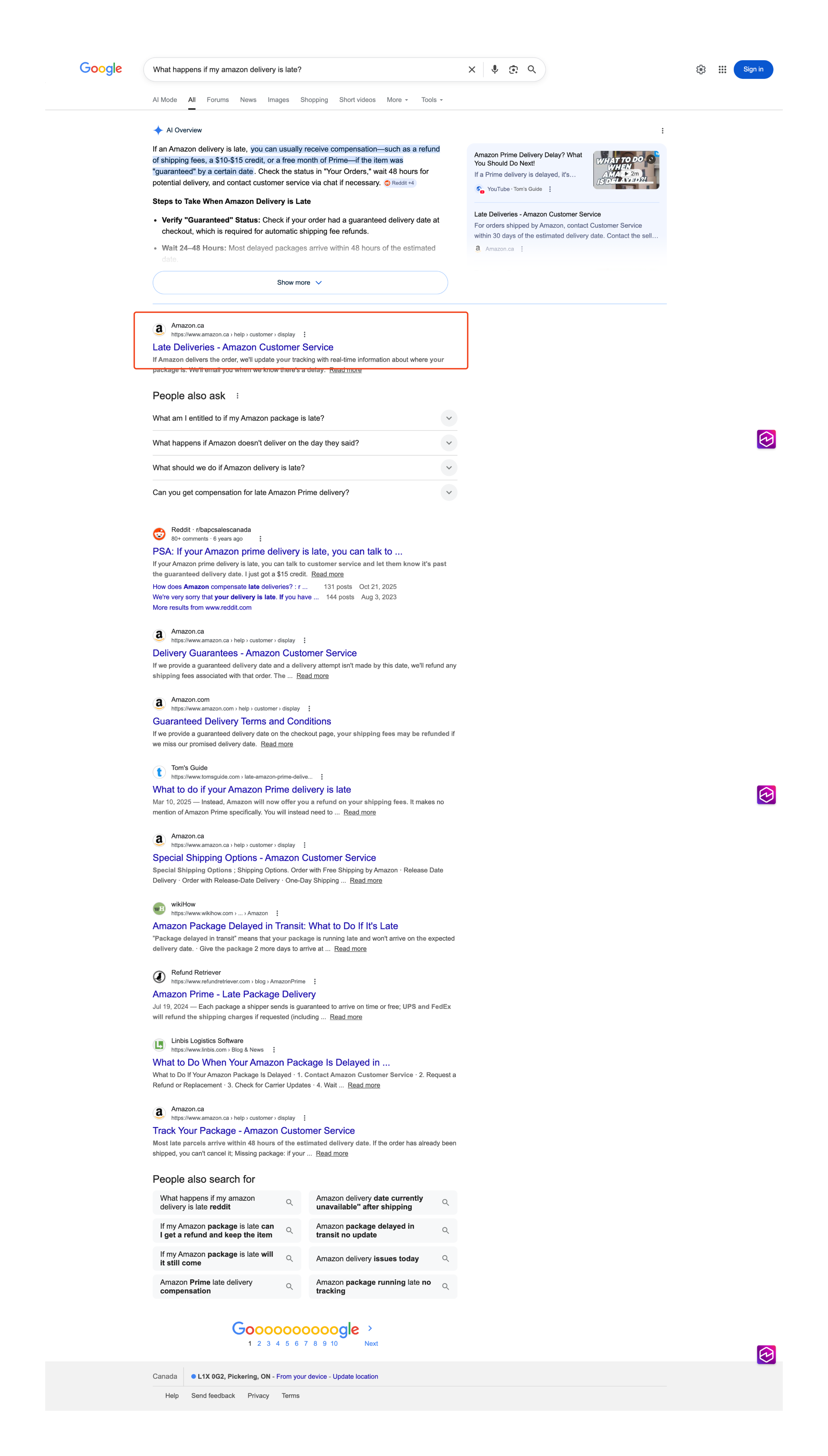
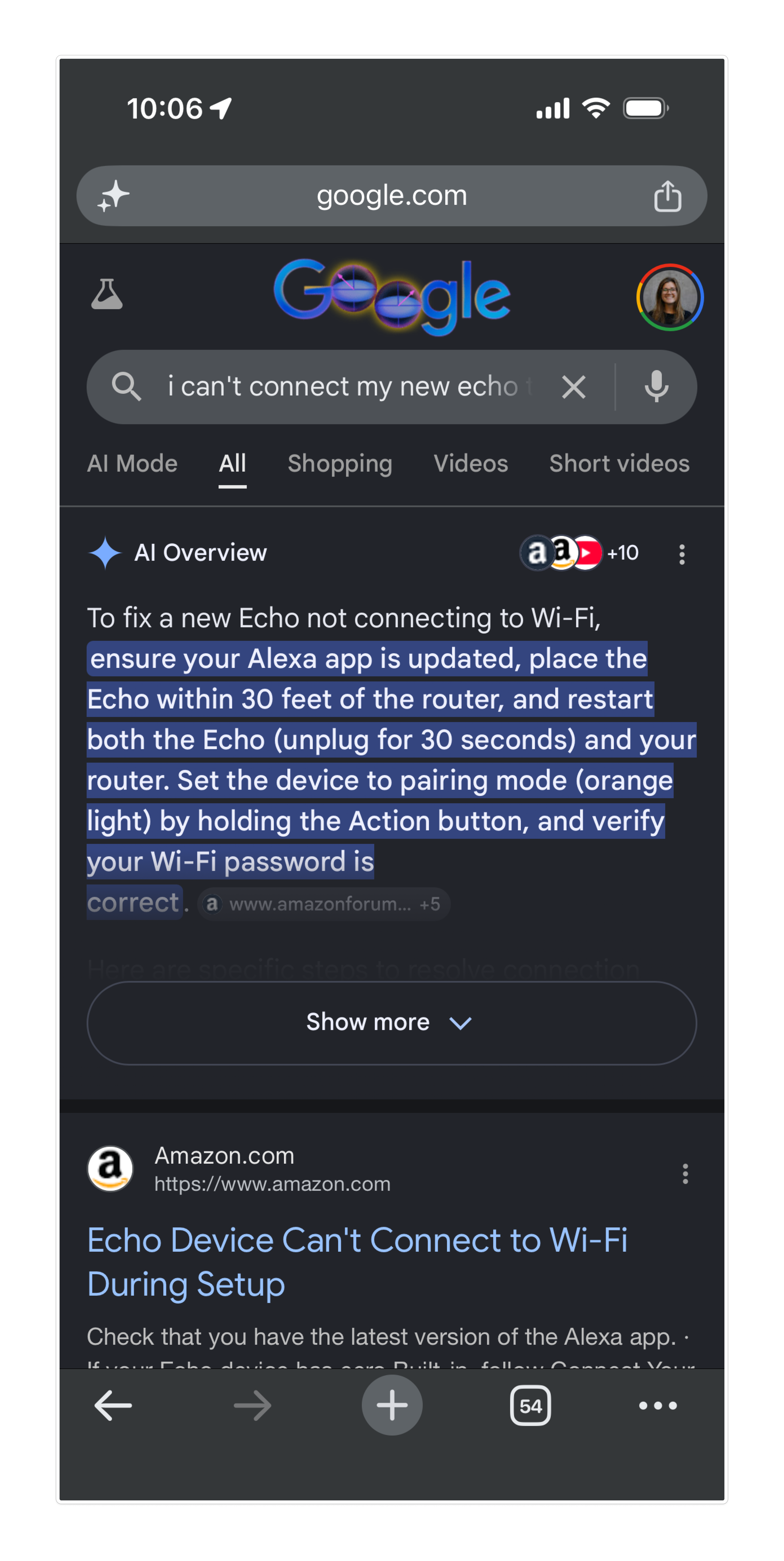
Googles issue, clicks email link, or navigates in-app
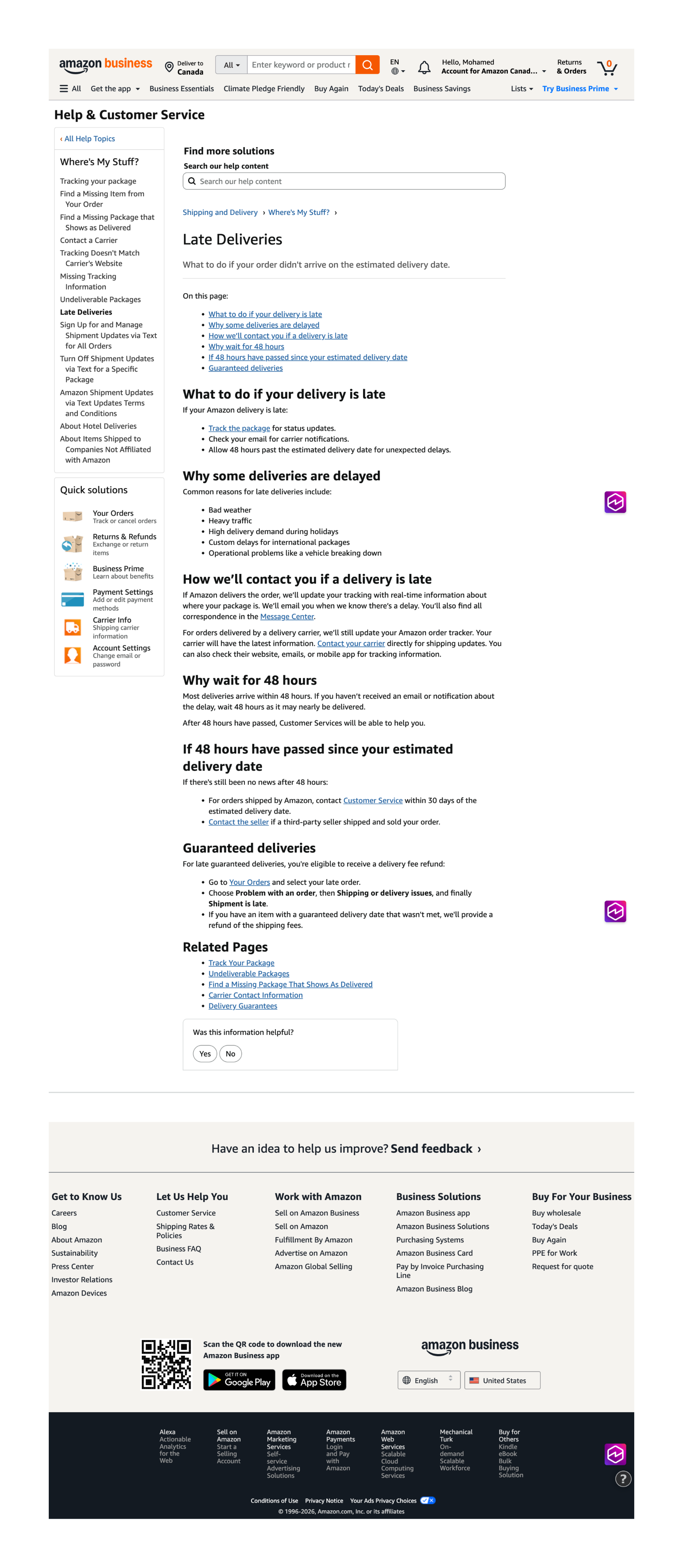
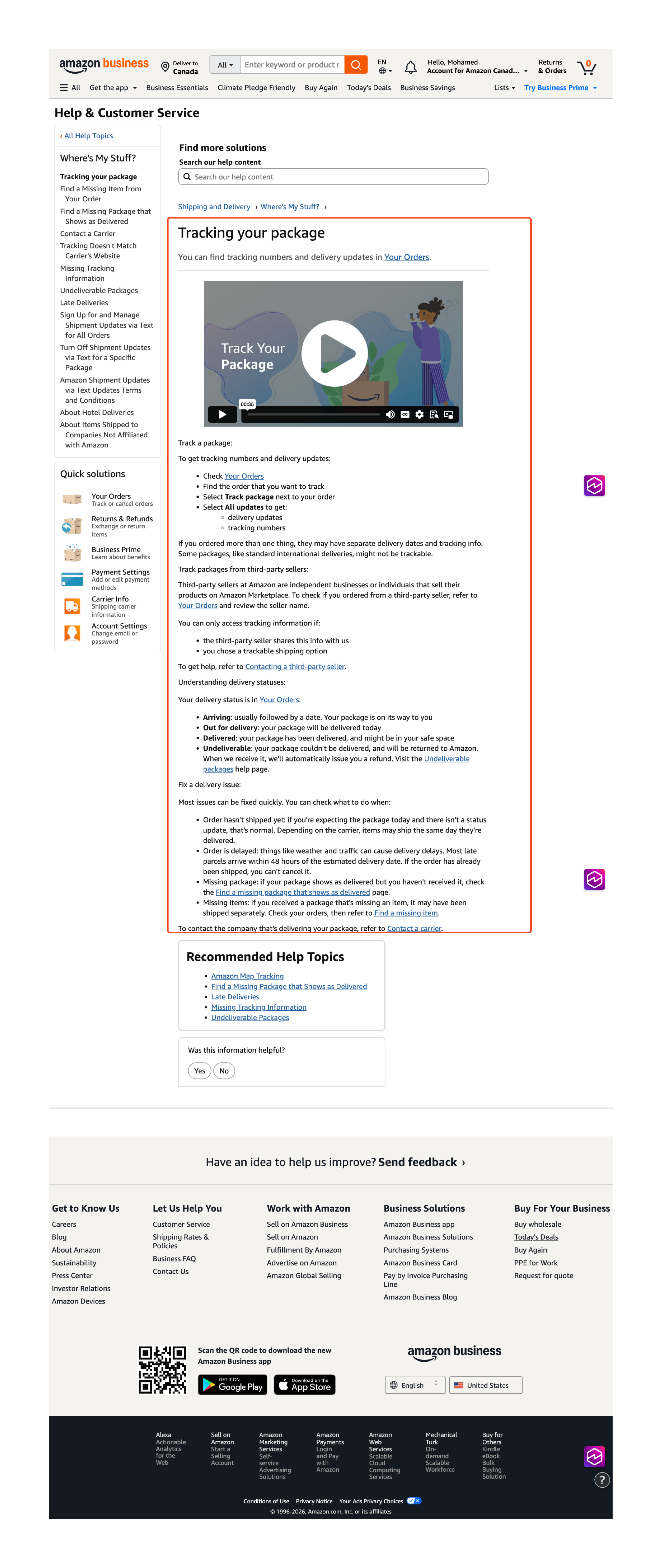
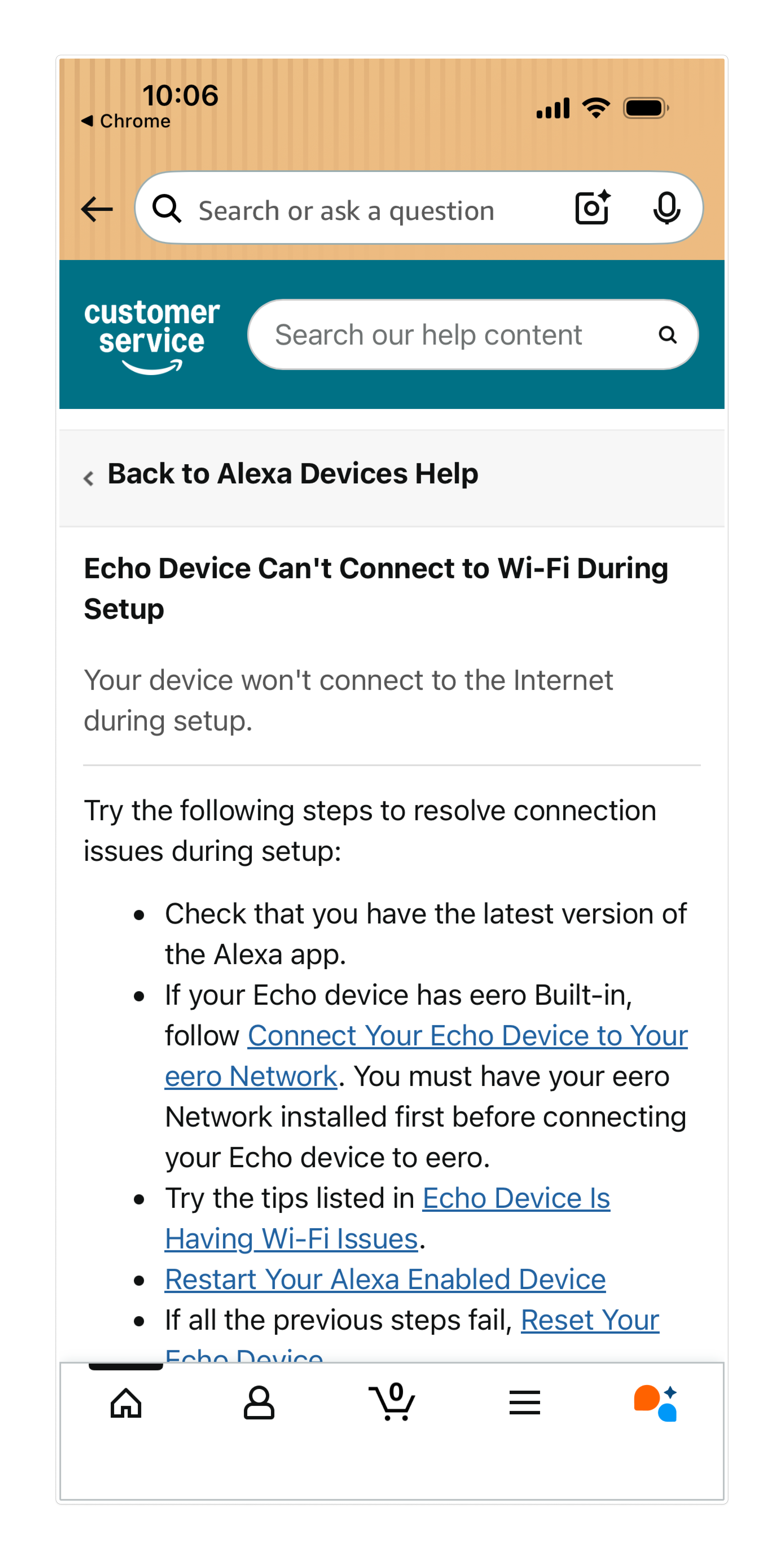
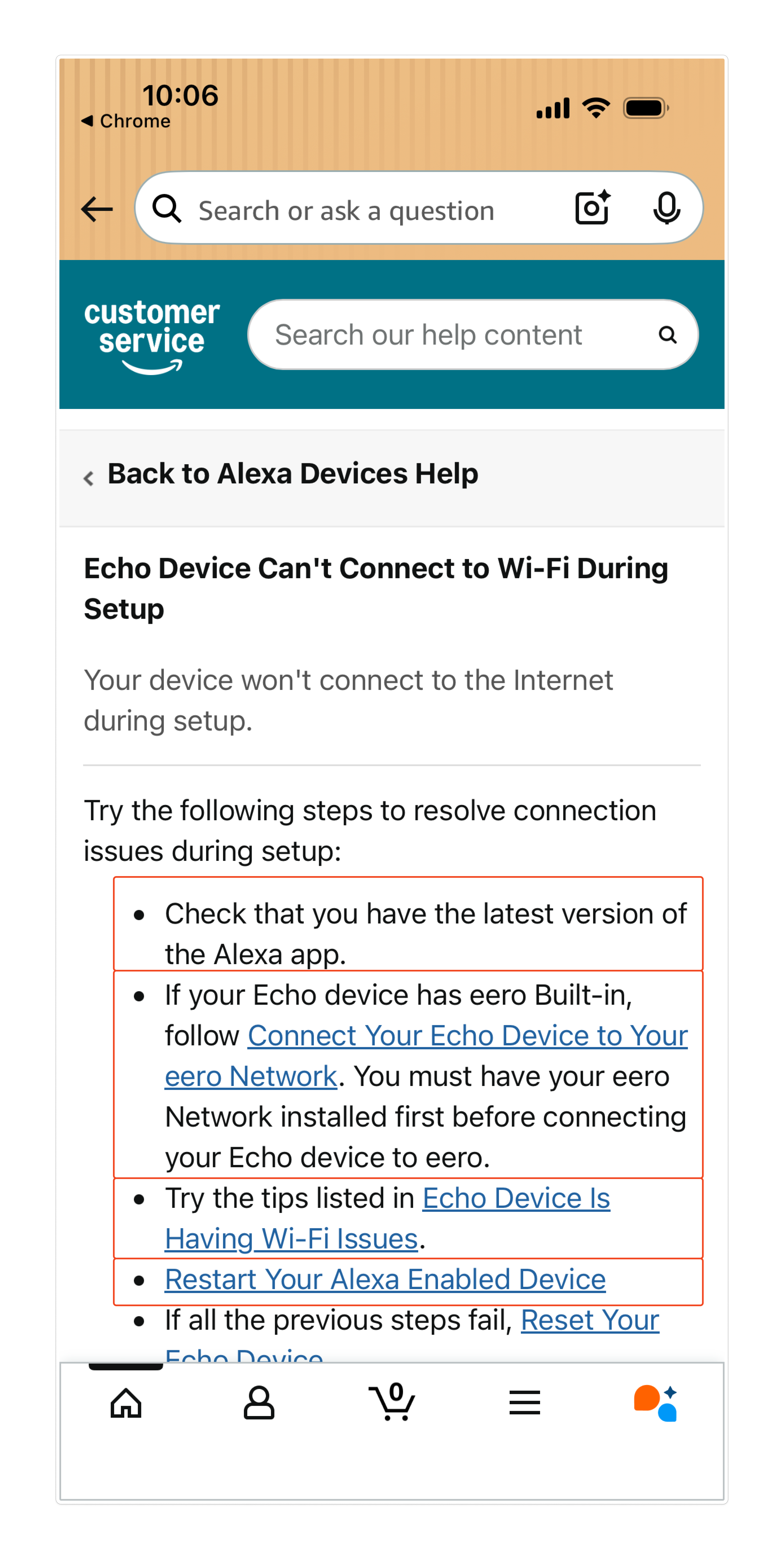
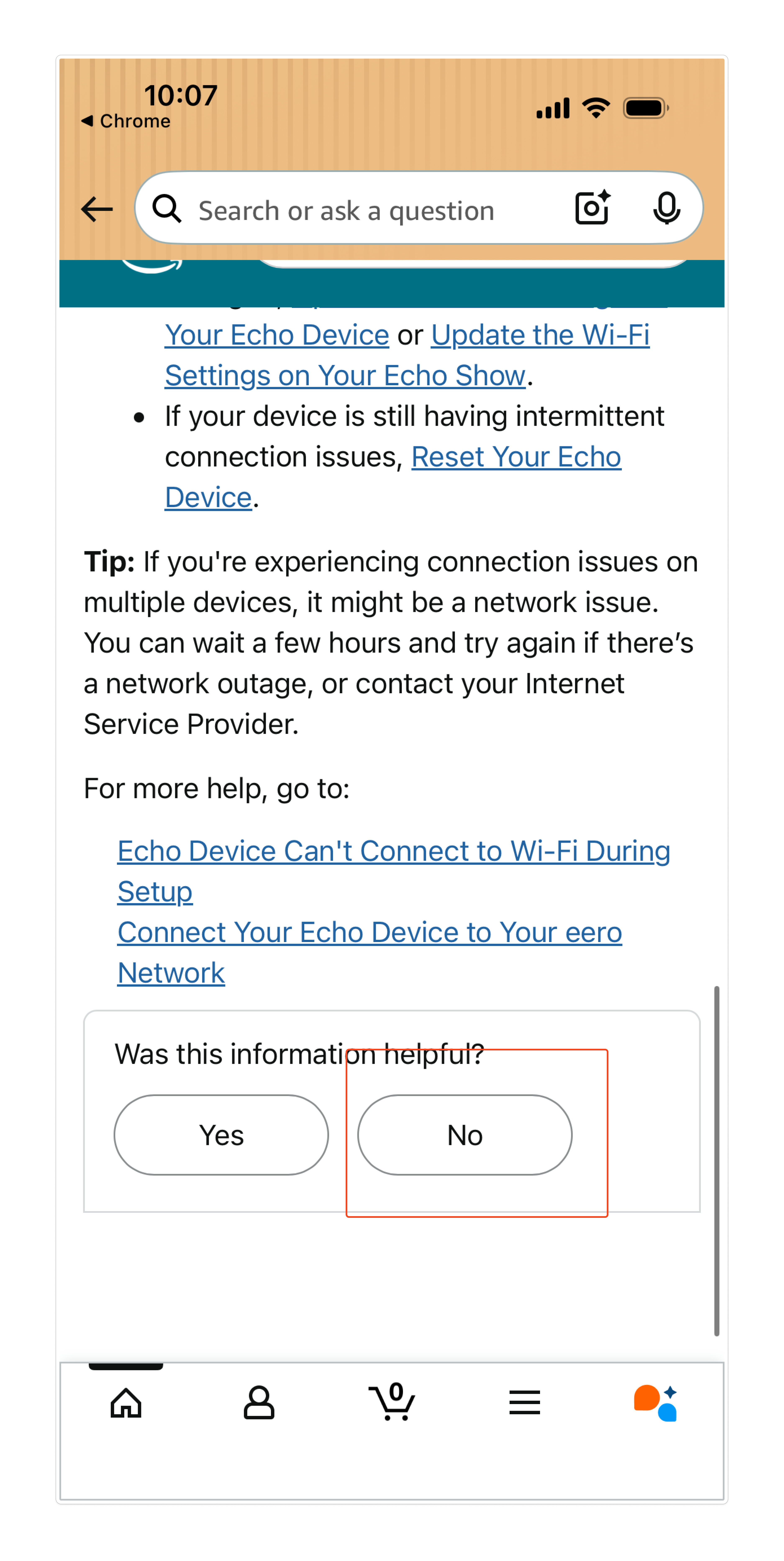
Arrives at generic shipping and delivery article
Scrolls through multiple sections looking for their scenario
Attempts generic steps: track package, contact seller
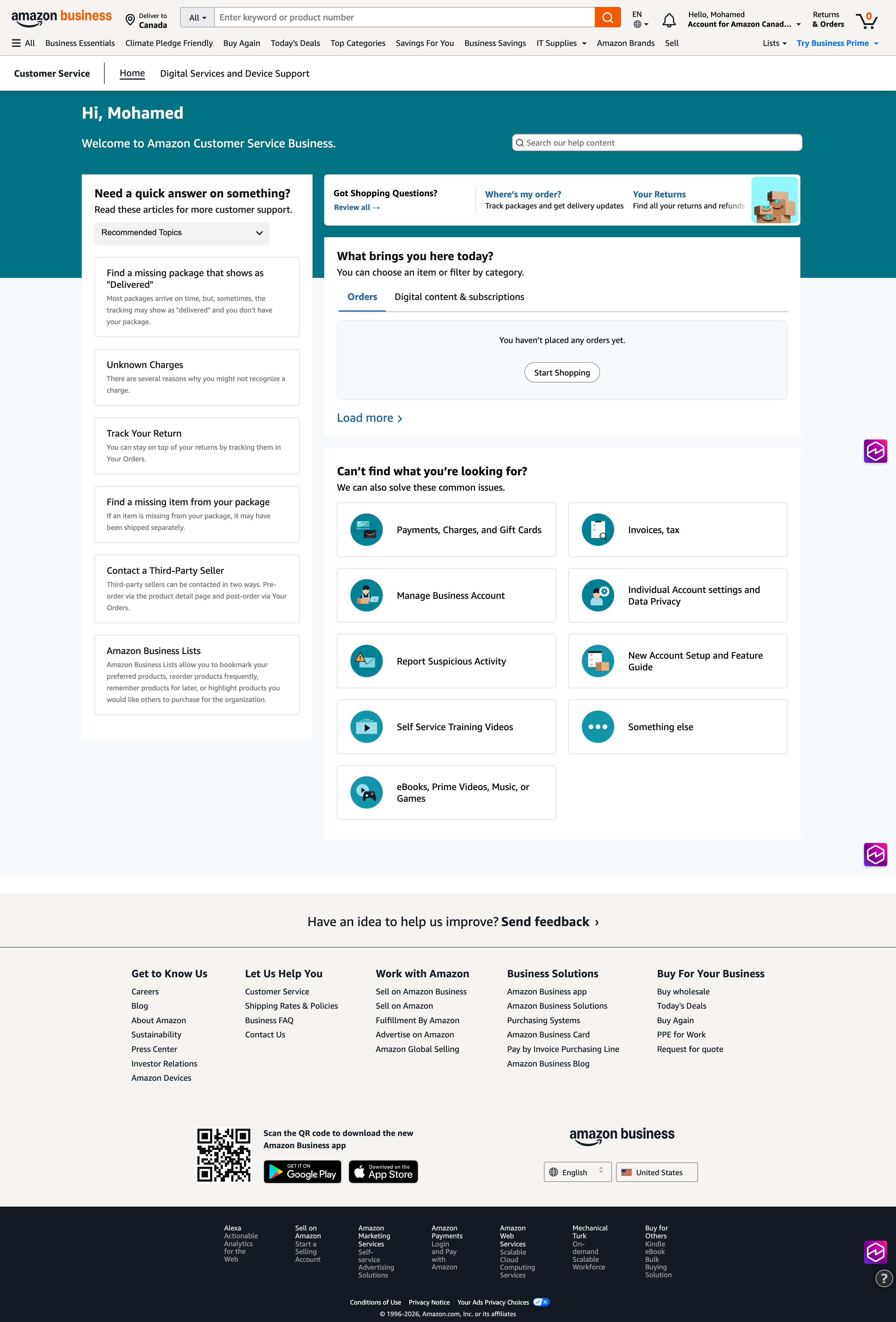
Clicks through to CS Home Page to find contact option


Order tracking UI displays status
Order status pageDelivery notificationSearch engine returns Help link
Google results pageStatic content, no personalization
Shipping & delivery articleHelp page URLAll scenarios shown at once
Article sectionsGeneric troubleshooting list
Step-by-step listRequires full re-entry of issue
CS Home PageContact formThese breakdowns are not unique to one scenario. From shipping issues to device troubleshooting, the same structural patterns emerge across every help page journey.
33M reported help was not helpful
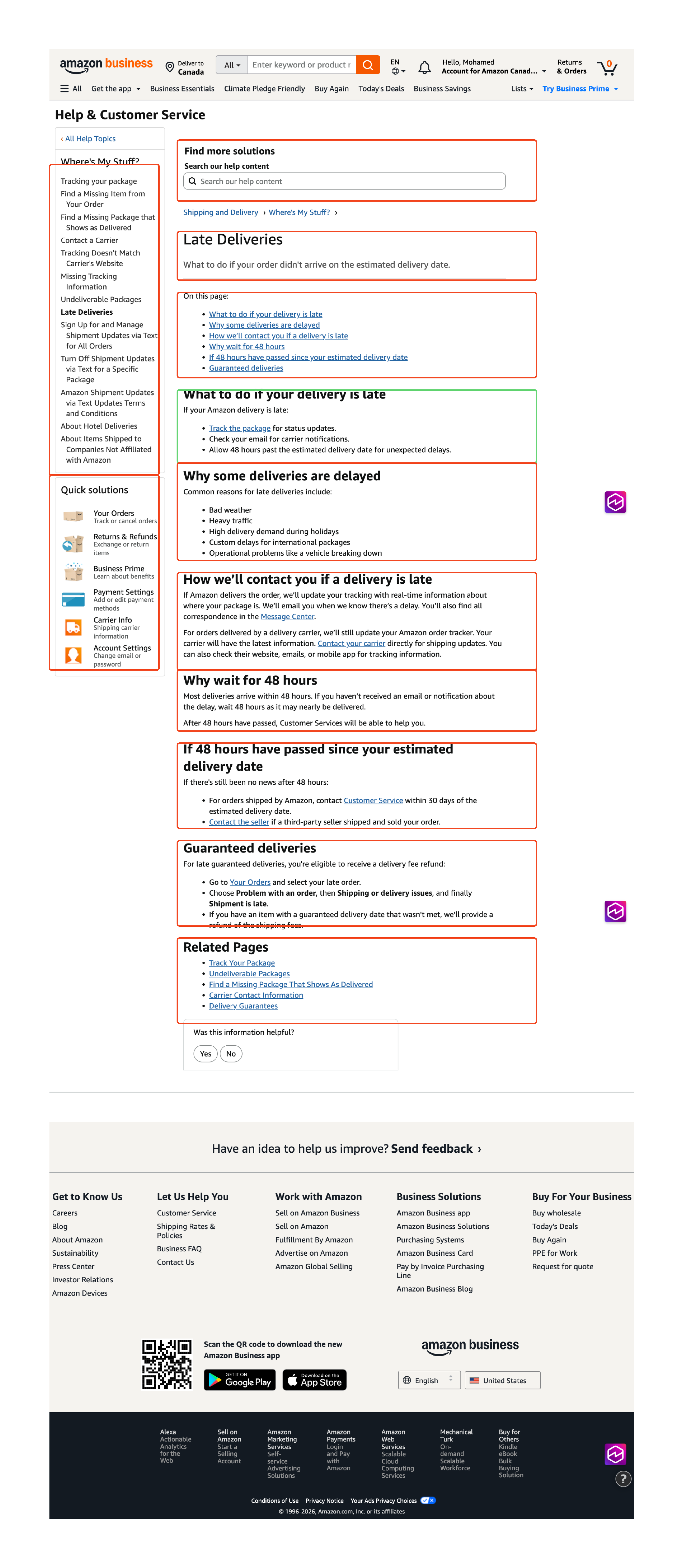
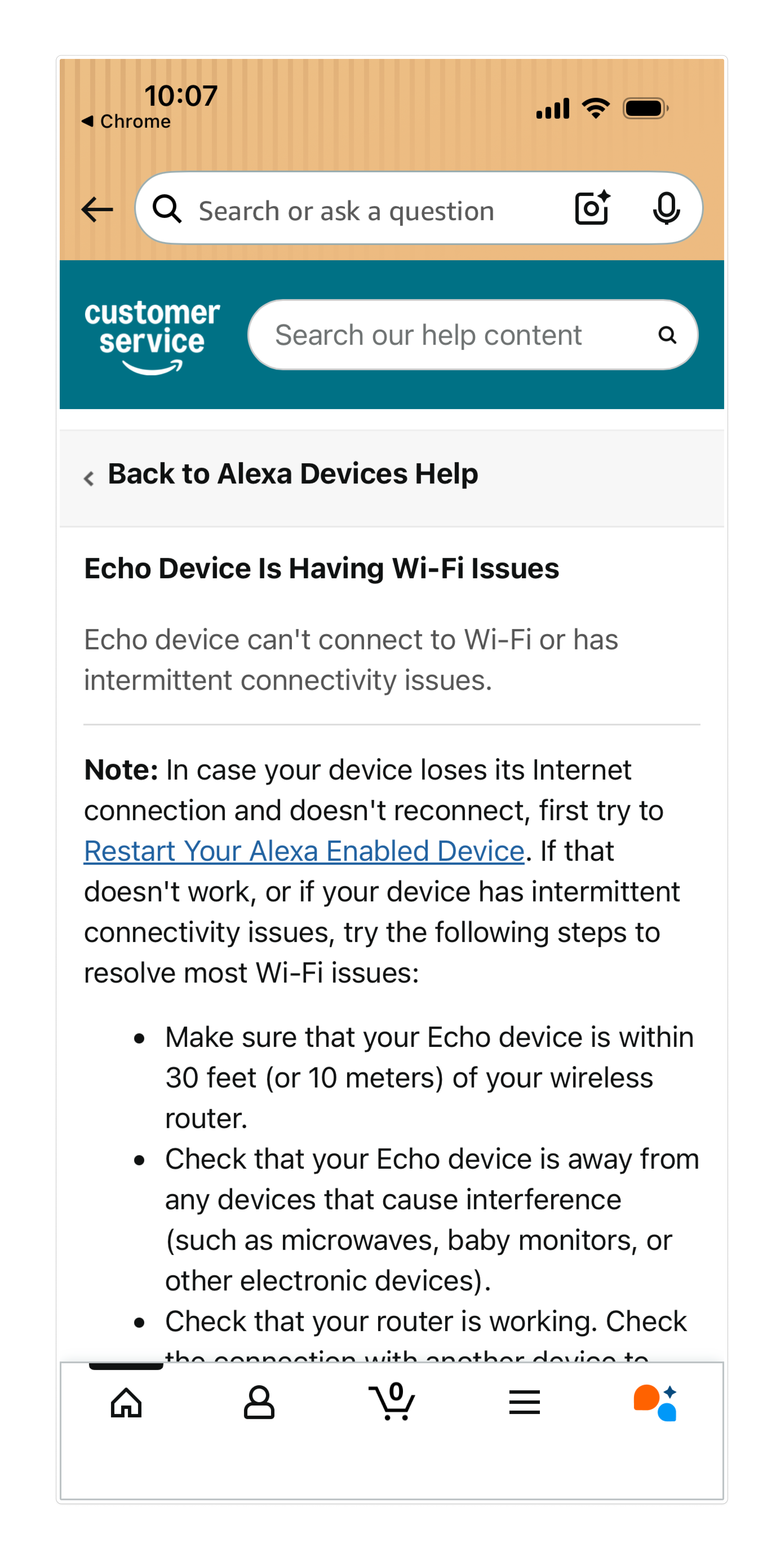
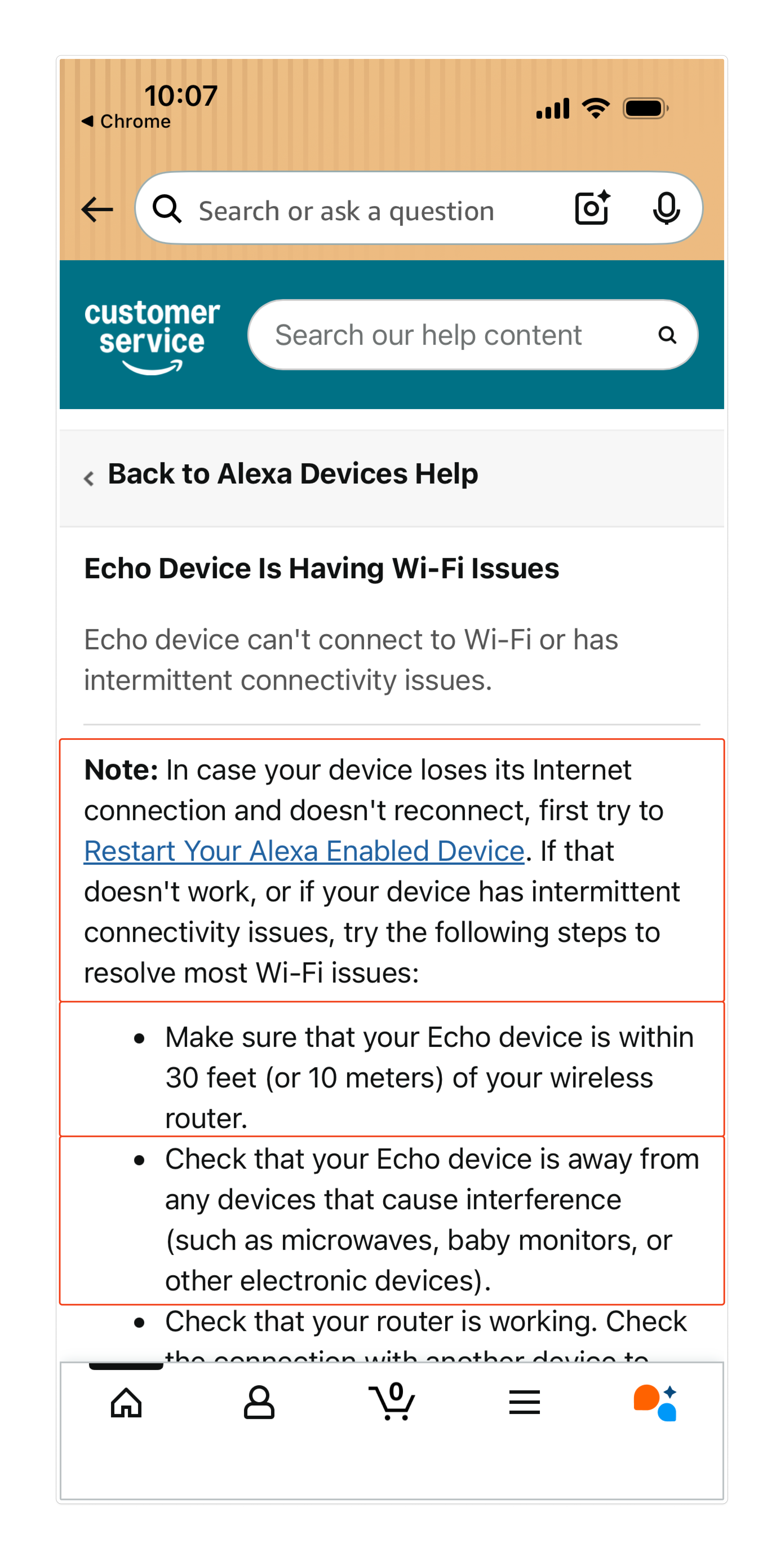
Help pages present identical content to every customer regardless of account context, device ownership, order status, or support history. Customers must manually filter what applies, repeat steps they've already taken, or follow troubleshooting that doesn't match their situation.
No in-page actions, automated resolutions, or guided workflows
Help pages require customers to read, interpret, and manually execute every step. Resolution requires navigating to other pages or apps, or contacting an associate, placing the full cognitive burden on the customer and driving avoidable contacts.
7+ pages per session, avg 2:39 navigating
Customers bounce between help pages, apps, and browsers: retrying searches, trying different articles, and copying links across platforms. No single path resolves the issue. Time increases significantly for device and technical support scenarios.
No heading hierarchy, no progressive disclosure, no accordions
Articles combine multiple related use cases on a single page. Dense text blocks with no visual separation or filtering by customer context.
Lack of structured content limits discoverability
Help pages lack proper heading hierarchy and machine-readable content, limiting discoverability in search engines and AI-driven support experiences such as Rufus, Alexa+, chatbots, and Google AI. CS Help search itself also has performance issues.
Shipping & delivery: 17 clicks vs. 3-5 expected
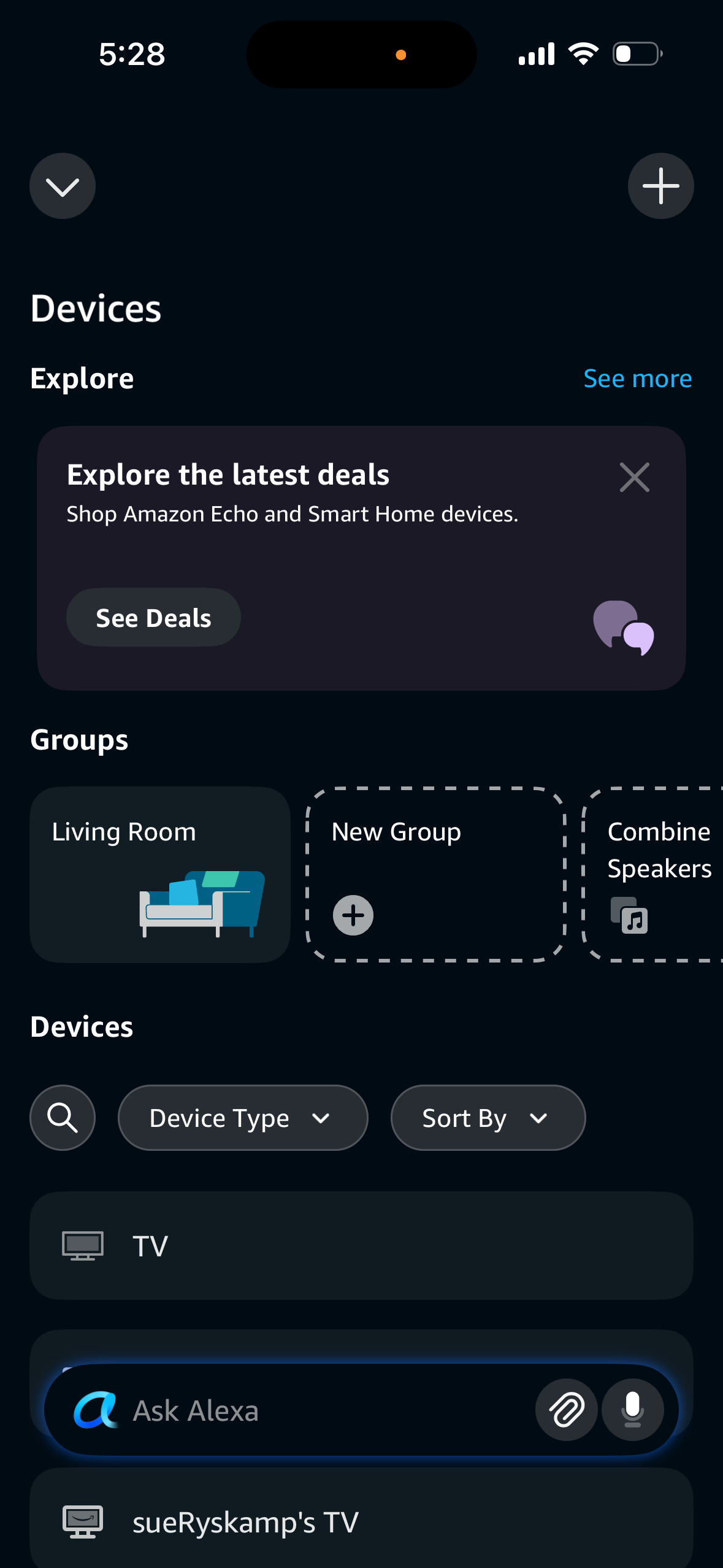
Help articles are buried deep, disconnected from where issues occur. Shipping and delivery takes an estimated 17 clicks across 7+ pages. Device troubleshooting requires 5+ clicks just to reach an article, then offers no escalation path.
Context and intent. They've already identified their issue and landed on a page that matches their query.
3-5 unnecessary steps. Forces them to re-explain their issue and drops the context they arrived with.
The opportunity: invest in context-aware Help Pages with in-page resolution capabilities that meet customers where they are, not where we want them to be.