Part 3 · Journey
Seven stages across the HITL review
What the customer experiences — and everything they never see that makes it work.
Shown: OORTW (late return). HITL pattern applies across other CSA-decision use cases.
Stages
Time flows left to right
1
Customer initiates
Customer asks
2
CS Chatbot gathers context
CS Chatbot gathers
3
Confidence boundary
CS Chatbot pauses
4
Routes to DART
System routes, customer waits
5
CSA reviews in 37s
CSA accepts, reads, decides
6
Decision
CSA decides
7a
Approve path
CS Chatbot resolves
7b
Reject path
Transfers to standard CSA
Customer Actions
What the customer does and feels
Describes issue
Types problem in chat
Waiting, comfortable
Normal pacing
Still within tolerance
Typing dots carry them
Wait begins
"Is it not loading? Is it my Wi-Fi?"
Wensu N, DNR · HITL Customer Usability, Apr 2026
Perceived wait vs actual
OORW
+28%
DNR
+16%
Start Return
+43%
Gap widens where customers anchor to a faster flow.
Resolution delivered
Caveat / completeness
Approved doesn't equal satisfied when the options don't match expectations.
"The only button is 'Get a refund'."
Wensu W, Start Return · HITL Customer Usability, Apr 2026
Critical CX risk
Rejection hits customer
"Frustrated and disregarded. I'd at least like to plead my case to somebody live rather than an agent."
John T, OORW · HITL Customer Usability, Apr 2026
- To be heard
- To provide context
- To understand the reasoning
- To access human empathy
Frontstage
What the customer sees in the CS Chatbot
Chat input
Free-text
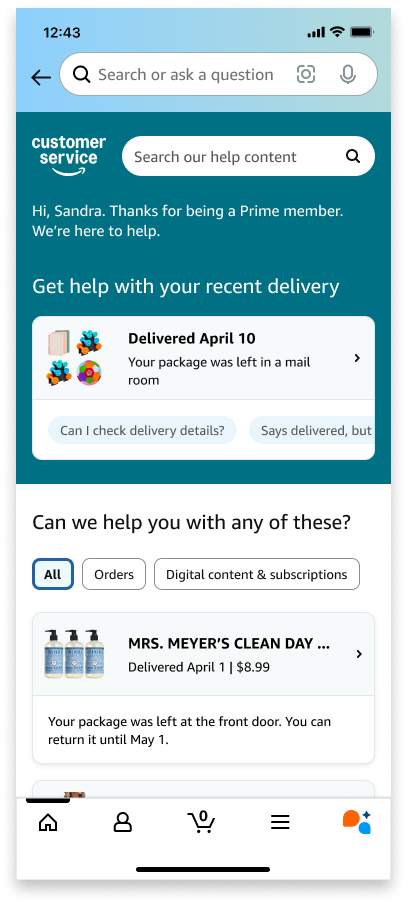 1 of 3
1 of 3
Typing dots
"CS Chatbot is thinking"
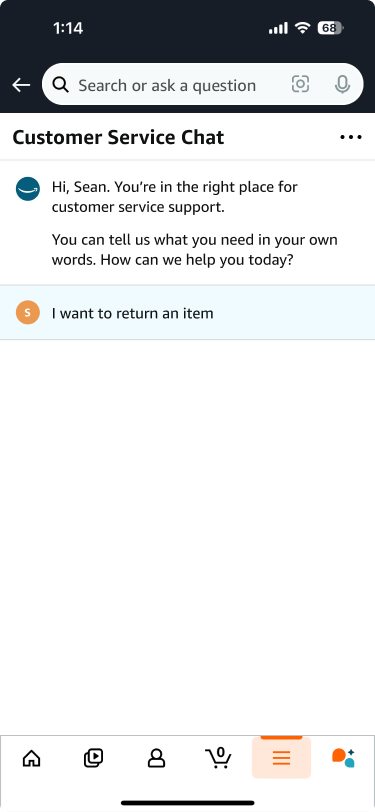 1 of 7
1 of 7
"Let me look into this"
Same message regardless of path
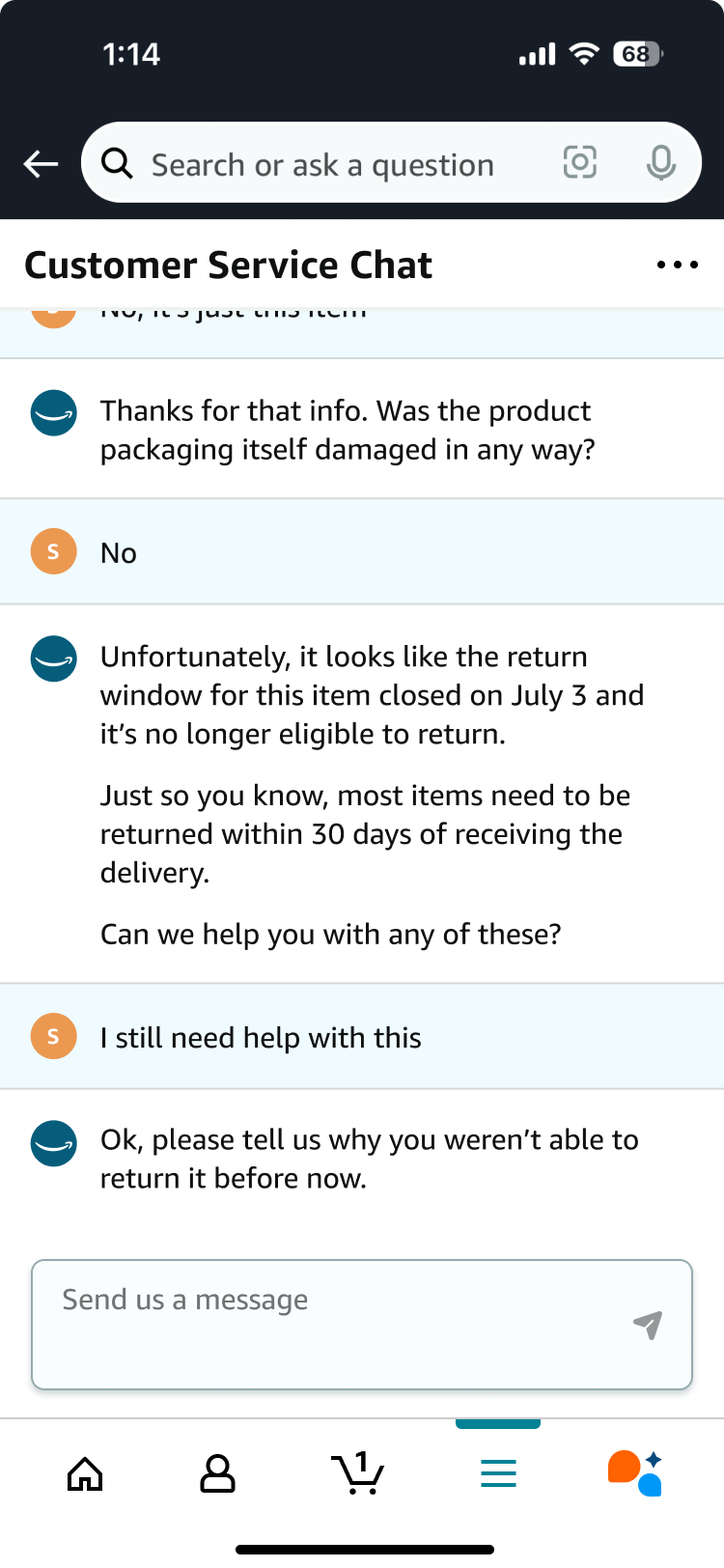 1 of 3
1 of 3
"Looking for a solution..."
Same screen across stages 4-6 · CSA involvement not surfaced
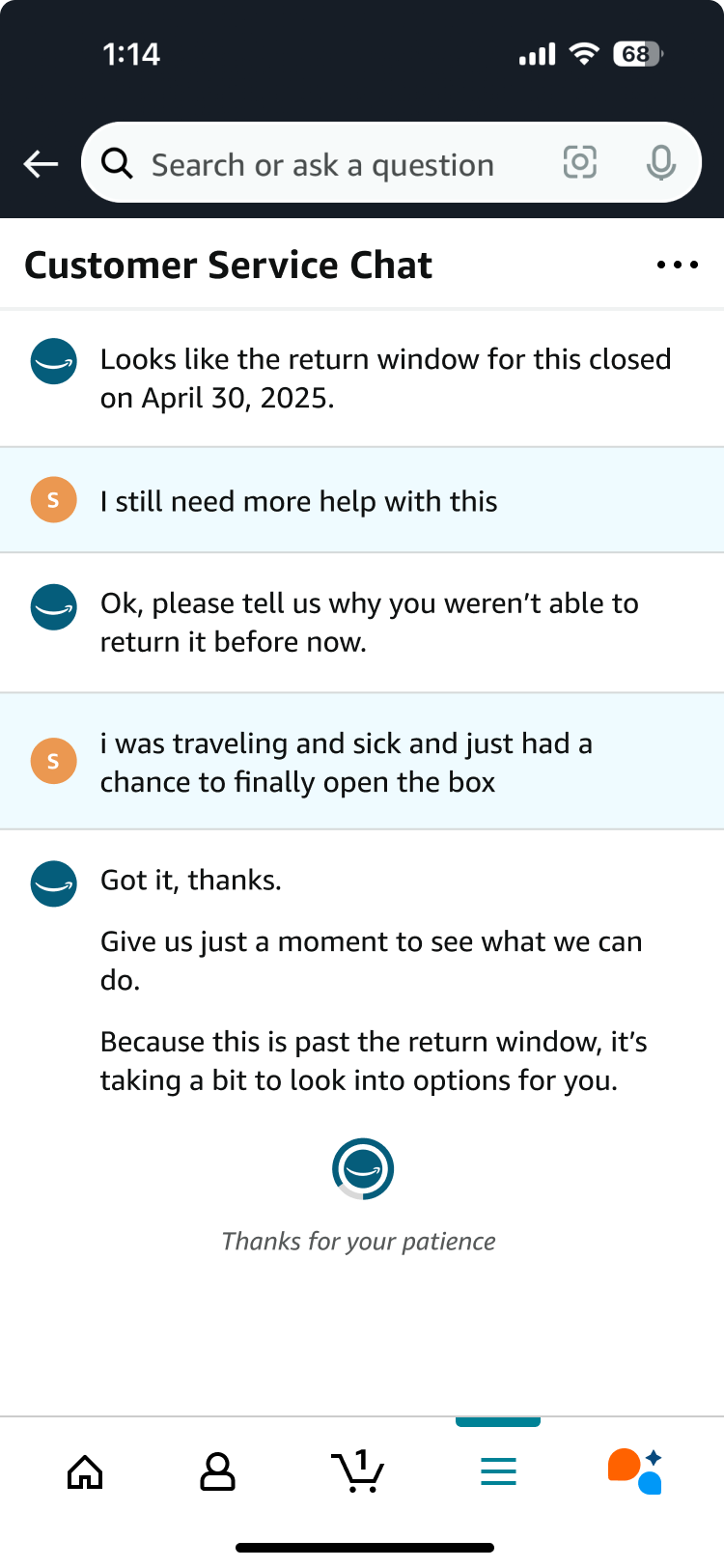
Approved action
Refund / replacement / credit
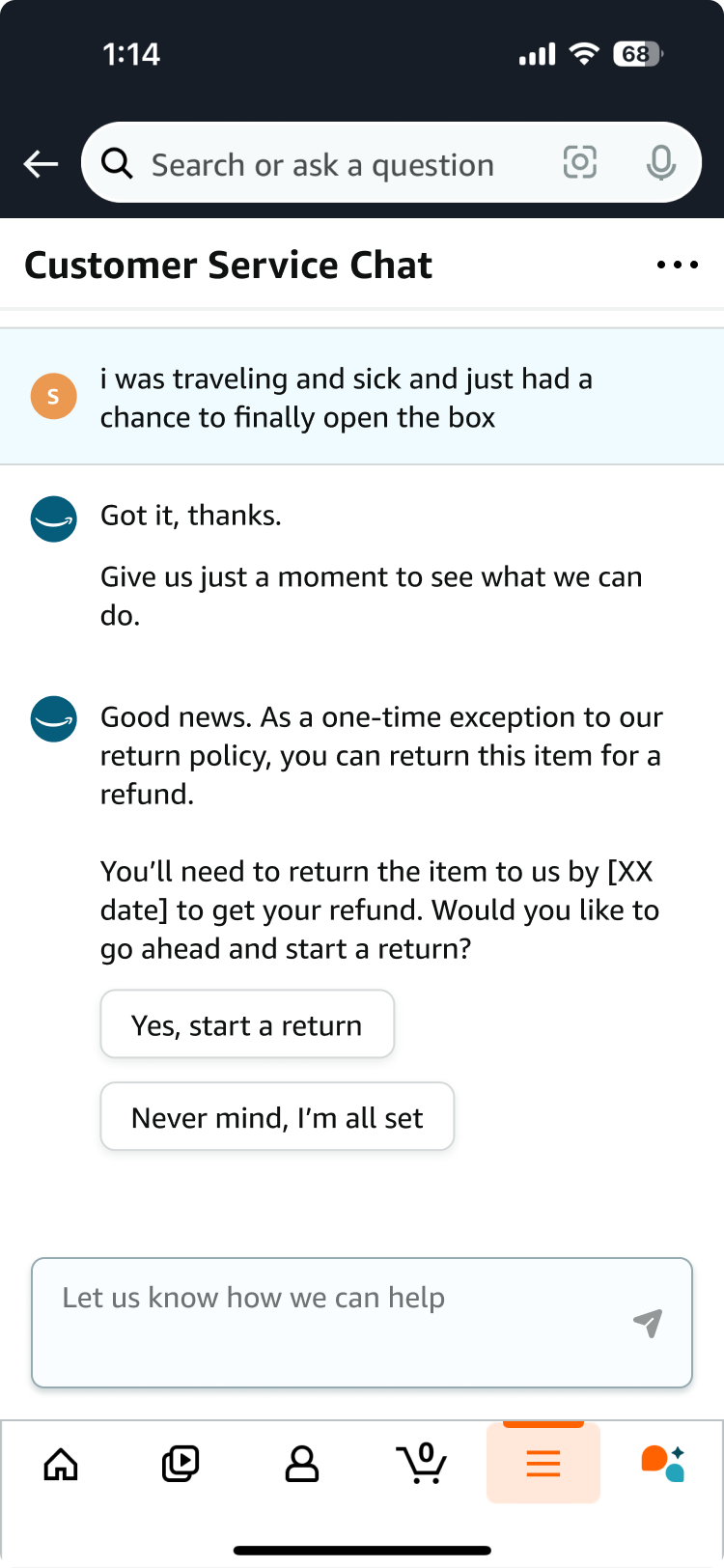
Transfer or dead-end
Structured chat limits
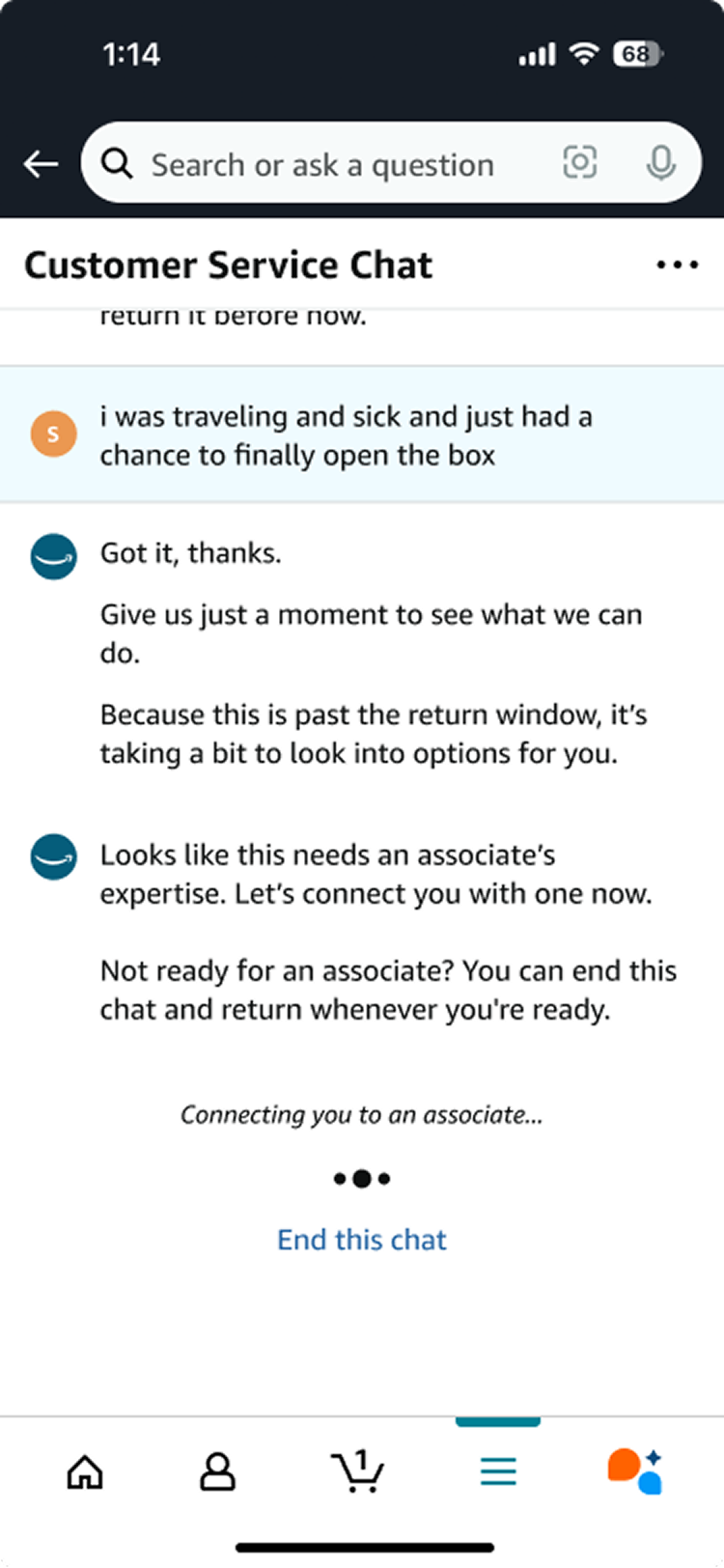 1 of 2
1 of 2
Line of Visibility
04 Customer never knows
Holds while the CSA review stays invisible · cracks on rejection
Backstage
What the CSA sees on AC3; bot internals
CS Chatbot gathers context
Order API · profile query
Confidence boundary
Cannot resolve autonomously
Enters DART queue
Specialist queue. CSA picks up within seconds.
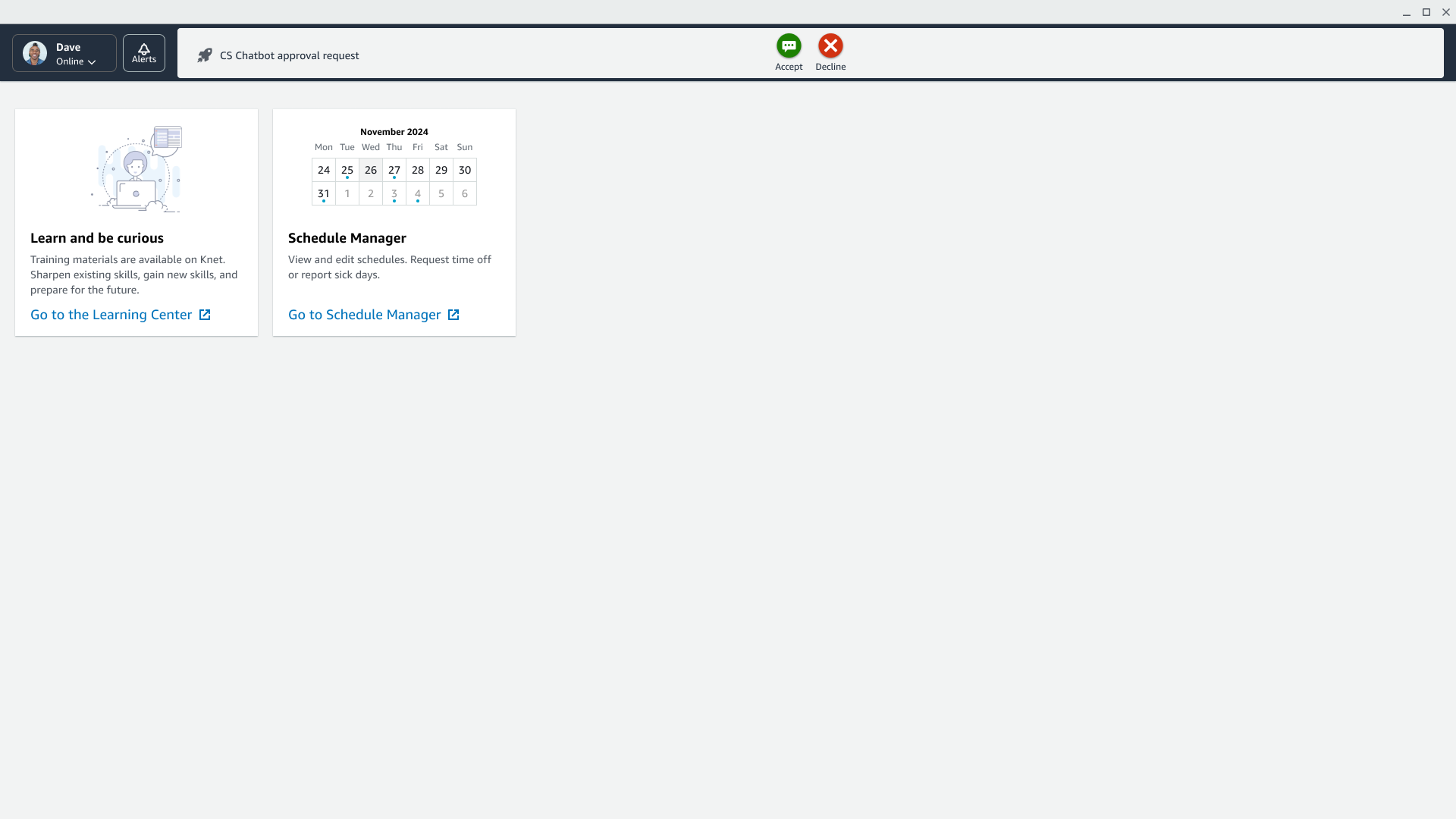 AC3 lobby · stage 4
AC3 lobby · stage 4
37s
Specialist reads the case
One expert, 37 seconds, under time pressure.
CSA sees issue summary, customer utterance, solve card, and chat transcript.
01 One Expert 03 37 Seconds
Approve or reject click
Handle time after the click
02 One Decision
Approve
3.73 min
Reject
12.32 min
Reject path is 3.3x longer
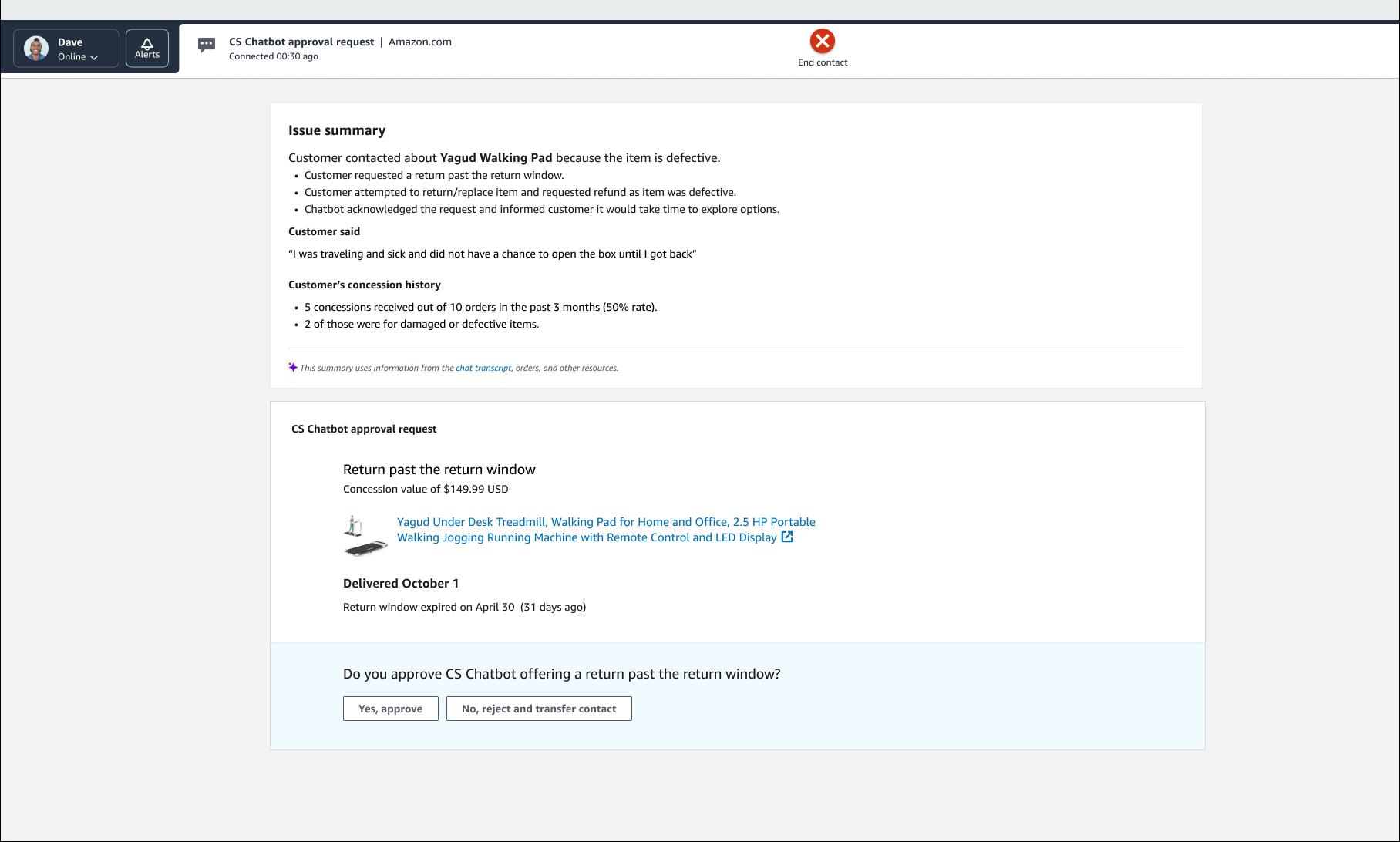 AC3 review screen · stages 5-6
CS Chatbot executes
0.0%
of approvals need zero further CSA time
Transfers to standard CSA
Today: DART writes transfer note · case re-queues to chat CSA
Re-queue, re-auth, new context-load. Future: DART takes over the chat directly.
Line of Internal Interaction
Where CSA action meets routing infrastructure
Support Processes
Routing, plumbing
Connect / CCMS
14% forced transfer · plumbing, not HITL logic
Live-agent transfer
Re-queue, re-auth, context-load
What the map implies